Posts

Eradication of Child Labour
Image
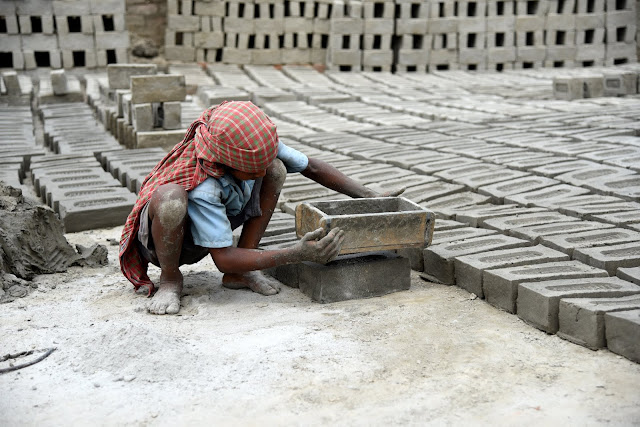
Eradication of Child Labour  PIB, 18th July 2018  Child Labour is an outcome of various socio-economic problems such as poverty, economic backwardness, illiteracy etc. As per 2011 Census, the number of main workers in the age group of 5-14 years in the country is 43.53 lakh which shows a decline from 57.79 lakh as per 2001 Census. Under Legislative action plan Government has enacted the Child Labour (Prohibition & Regulation) Amendment Act, 2016 which came into force w.e.f 01.09.2016.  The Amendment Act, inter alia, provides for complete prohibition on employment or work of children below 14 years and also prohibits employment of adolescents (14-18 years) in hazardous occupations and processes. Ministry of Labour & Employment has circulated an Action Plan to all States/UTs indicating the provisions and related actions by State Governments/UTs for enforcement of the Child Labour (Prohibition and Regulation) Amendment Act, 2016. A child labour cam...
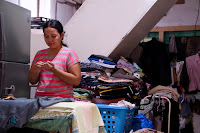

No law can Change behaviour of employer : Domestic Worker

Image
No law can Change behaviour of employer : Domestic Worker  On International Domestic Workers’ Day,  Domestic Worker Rights Activists  celebrate a growing movement to assert the rights of this vast but hidden workforce. An estimated 67.1 million people are employed in domestic work around the world, most of them wome n. Domestic work has enabled many women to enter the labour market and benefit from economic autonomy Domestic workers, Jakarta Indonesia   Copyright: ILO/A. Ridwan  The large supply of domestic workers in India has meant a meant a shift of care responsibilities from women in the households to hired domestic workers who are a predominantly female and largely invisible Domestic worker is a person who is employed in any household on a temporary or permanent basis to do the household work. In the decade after liberalisation, there was a nearly 120% rise in the number of domestic workers in India. ...

The Future of labour We Want : Innovative workforce

Image
The Future of labour  We Want  : I nnovative workforce The idea that work plays a number of universal roles in the lives of individuals and societies – meeting material need, providing individual self-fulfilment, connecting the individual to society – does not mean that everybody wants, or expects, exactly the same thing from work, or that preferences will not change over time. If they are in a position to do so, different people will make different decisions about the trade-offs between paid work and free time, about the workload or responsibilities they wish to take on, or indeed about whether or not to participate in the workforce at all at any given time Quartz Media reported that Automation, advanced manufacturing, AI, and the shift to e-commerce are dramatically changing the number and nature of jobs around the world. Ride-sharing startups and others are ushering in the rise of part-time work and redefining what it means to be an employee. What is the fut...

Stop child labour, we want education

Image
Stop child labour, we want education On this coming 12 June 2018,whole world is going to mark this day how to abolish the “child labour” blot on Humanity .The term “child labour” is often defined as work that deprives children of their childhood, their potential and their dignity, and that is harmful to physical and mental development .  The International Labour Organization (ILO) launched the first World Day Against Child Labour in 2002 as a way to highlight the plight of children engaged in work that deprives them of adequate education, health, leisure and basic freedoms, violating their rights If the children are still trapped in the international supply chains, if the children are still enslaved, if the children are still sold and bought like animals – sometimes for less than the price of animals – to work in the fields and farms, and shops and factories, or for households as domestic workers, this is a blot on humanity.Child labour is not an issue that ...

Two billion of the world’s employed population aged 15 and over work informally, representing 61.2 per cent of global employment

Image
Two billion of the world’s employed population aged 15 and over work informally, representing 61.2 per cent of global employment : ILO The new report “Towards a More Equal City: Including the Excluded”, says the creation and reform of local economic development plans, urban land use plans, urban policy, and laws and regulations must be participatory and include informal workers, those who represent informal workers, and other relevant stakeholders.  “Include informal worker leaders in participatory policymaking and rule-setting processes such as development plans and urban land allocation plans,” says the WRI report.  This includes increasing informal workers’ access to public services, public spaces and public procurement.  And to better harness and encourage economic growth city governments and local officials should acknowledge the economic contribution informal workers make to the urban economy and reduce harassment and penalisation.  “Cities sh...

Democratic space shrinks and unchecked corporate greed on the rise

Image
ITUC Global Rights Index 2018: Democratic space shrinks and unchecked corporate greed on the rise photo: AdobeStock Shrinking democratic space for working people and unchecked corporate greed are on the rise according to the annual ITUC Global Rights Index. The number of countries with arbitrary arrests and detention of workers increased from 44 in 2017 to 59 in 2018, and freedom of speech was constrained in 54 countries “Democracy is under attack in countries that fail to guarantee people’s right to organise, speak out and take action. Brazil passed laws that denied freedom of association, China restricted free speech and the military was used to suppress labour disputes in Indonesia,” said Sharan Burrow, General Secretary, International Trade Union Confederation. More countries are excluding workers from labour law – from migrant workers, public sector employees to workers in platform businesses, with 65% of countries excluding whole categories of workers from lab...

174th meeting of ESIC held yesterday in New Delhi

Image
Dispensary cum Branch Offices to be Openned in all the districts of the country Nursing Internship Program in ESIC Hospitals to begin soon Some very important decisions were taken towards improvements in service delivery mechanism of ESIC in 174 th  meeting of ESI Corporation in New Delhi yesterday under the Chairmanship of Shri Santosh Kumar Gangwar, Union Minister of State for Labour & Employment (I/C). To strengthen medical services in all the districts of the country, the decision for opening of one ESIC Dispensary cum Branch Office (DCBO) in every district of the country was taken in the meeting. The DCBO will provide primary medical care, referrals for secondary medical care, scrutiny of bills of secondary care referrals, etc. besides distribution of drugs to Modified Employer Utilization Dispensary, IMPs in the district, payment of cash benefits, survey work for coverage in the district. The ESIC will bear the establishment and operational cost of DCBO, wit...